

A broken tooth can stop you in your tracks. Whether it happened suddenly or has been building over time, once the damage reaches a point where the tooth cannot be saved, extraction is often the clearest way forward.
At Sure Smile Dental in Coopers Plains, Dr Boby Thomas and the team take a gentle, educational approach to same-day dental extractions, making sure you understand each step before anything begins.
Quick Overview
- A broken tooth extraction procedure is the clinical removal of a tooth that is too damaged to be repaired, though what makes a tooth unrestorable depends on factors that vary between patients.
- It may be recommended when a fracture extends below the gum line, decay is too advanced, or infection has compromised the surrounding bone.
- The procedure may be straightforward or more involved depending on how the tooth has broken and how much remains above the gum line.
- Recovery typically follows a predictable path, but individual health, the type of extraction, and aftercare compliance all influence how the healing period unfolds.
- Knowing what to watch for in the days after the procedure is as important as the procedure itself.
Below, we explain when extraction may be recommended, what happens on the day, and how to support healing once you are home.
When Your Dentist May Recommend Extraction
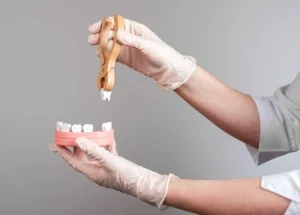 Not every broken tooth needs to come out. At Sure Smile Dental, Dr Boby Thomas will always assess whether the tooth can be saved before recommending extraction.
Extraction is typically considered when the break extends deep below the gum line and into the root, making restoration impractical. It is also recommended when tooth decay has progressed to the point where there is insufficient healthy structure remaining for a crown, or when infection has spread into the surrounding bone. Severely impacted wisdom teeth and teeth that have fractured as a result of dental trauma are among the most common cases seen at the practice.
Tooth extraction is carried out when a tooth is too badly damaged to be repaired and may also be necessary when a tooth is infected and the infection has not responded to other treatment. Where restoration is possible, that option will be presented first.
Two Types of Extraction: Simple and Surgical
The approach used depends on what remains of the tooth and how it has fractured.
A simple extraction is performed when enough of the broken tooth sits above the gum line for the dentist to use extraction forceps to loosen and remove it. The surrounding area is numbed with local anaesthetic before the procedure begins.
A surgical extraction is needed when the tooth has broken at or below the gum line, when roots are curved or fused to the surrounding bone, or in the case of impacted teeth. A small incision is made in the gum tissue, and in some cases, a small amount of bone may be removed to allow the tooth to come free. The site is cleaned, and a dissolvable stitch may be placed to close the gum tissue.
Both types are performed under local anaesthetic. Most patients describe feeling pressure and movement rather than pain during the procedure. If at any point you feel sharp discomfort, let the dental team know immediately so more anaesthetic can be given.
Step by Step: What Happens on the Day
Understanding what to expect can help reduce any anxiety before your appointment.
Your appointment will begin with a review of your dental X-rays and a discussion of the procedure. Once local anaesthetic has been administered and the area is fully numb, the dentist will proceed with the extraction based on the approach discussed at your assessment.
Once the tooth is out, the socket is cleaned to remove any debris or infected tissue. A gauze pad is then placed over the site, and you will be asked to bite down gently to help control bleeding and support clot formation. Most straightforward extractions are completed within 30 to 45 minutes. Surgical cases involving complex root structures may take longer.
You will leave with clear aftercare instructions and, where needed, a prescription for pain relief or antibiotics.
After the Extraction: Supporting a Smooth Recovery
The days following an extraction play a significant role in how well and how quickly the site heals.
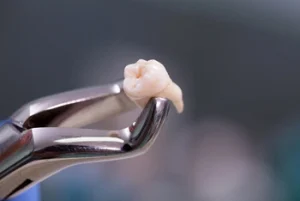 In the first 24 hours, avoid rinsing, spitting, or touching the socket. The blood clot that forms in the tooth socket is essential to the healing process, and dislodging it can lead to a painful condition called dry socket. Avoid smoking, drinking alcohol, and using straws during this period for the same reason.
From 24 hours onward, gently rinse with warm salt water after meals to keep the surgical site clean. Eat soft foods and avoid anything hard, crunchy, or very hot. An ice pack held to the outside of the face in the first few hours can help reduce swelling.
Aftercare following dental extractions, particularly surgical cases, includes biting on gauze to support clotting, avoiding straws, and rinsing gently with warm salty water in the days that follow. Most people return to normal daily activities within a few days, though full bone healing takes considerably longer.
Warning Signs That Warrant a Call to the Practice
Some degree of discomfort, swelling, and sensitivity is normal in the first few days. Knowing the difference between expected recovery and a sign that something needs attention is important.
Dry socket occurs when the blood clot is dislodged or fails to form properly, leaving the bone and nerve exposed. Symptoms typically appear two to four days after the extraction and include intense or worsening pain, rather than improving discomfort.
Other signs that should prompt you to contact Sure Smile Dental promptly include:
- Swelling that increases rather than reduces after the first 48 hours
- Pus, unusual discharge, or a foul taste from the extraction site
- Fever or feeling generally unwell
- Excessive bleeding that does not settle with gentle gauze pressure
A 2024 review of extraction complications published in the International Journal of Dentistry identified smoking, poor oral hygiene, and systemic health conditions as among the most significant risk factors for post-extraction complications, underscoring the importance of following aftercare instructions and attending any recommended follow-up appointments.
A Considered Approach to Tooth Extractions in Coopers Plains
At Sure Smile Dental, the team understands that the idea of a tooth extraction can feel daunting. Dr Boby Thomas takes time to walk patients through exactly what the procedure involves, answer every question, and ensure you feel as comfortable as possible before treatment begins.
If you have a broken tooth causing pain, or you have been told you may need an extraction, the team is here to help. Book an appointment at Sure Smile Dental in Coopers Plains, or book your appointment online. You can also call (07) 3185 2387.
Any surgical or invasive procedure carries risks. Before proceeding, you should seek a second opinion from an appropriately qualified health practitioner.
Frequently Asked Questions
Is a broken tooth extraction always necessary?
Not always. Whether a broken tooth needs to be removed depends on how much healthy tooth structure remains, how far the fracture extends, and whether infection is present. Your dentist will assess the tooth with X-rays before recommending extraction. If restoration is possible with a crown or other treatment, that option will be presented first.
Is the broken tooth extraction procedure painful?
Local anaesthetic is used to numb the area thoroughly before the procedure begins, which is intended to minimise discomfort during the extraction itself. Pressure and movement are normal to feel, though the level of sensation varies between individuals. Post-operative soreness and some swelling are expected and typically manageable with prescribed or over-the-counter pain relief.
How long does it take to recover from a tooth extraction?
 Initial healing of the gum tissue generally takes one to two weeks. Full bone healing takes longer, often several months, depending on the size of the extraction site and the complexity of the procedure. Following aftercare instructions carefully gives the site the best conditions for healing.
What is dry socket, and how do I avoid it?
Dry socket occurs when the blood clot that forms in the tooth socket is dislodged before the area has healed, leaving bone and nerve endings exposed. It causes significant pain, typically beginning two to four days after the procedure. To reduce the risk, avoid smoking, alcohol, straws, and vigorous rinsing for at least 24 hours after the extraction.
What happens after the extracted tooth has healed?
Once the extraction site has healed, your dentist can discuss options for replacing the missing tooth if appropriate. Dental implants, bridges, and partial dentures are among the possibilities, and the right choice depends on your oral health, the position of the gap, and your preferences. Leaving a gap unfilled can, over time, contribute to bone loss and shifting of neighbouring teeth.
References
Healthdirect Australia. (2024). ‘Tooth Extraction’. Healthdirect, updated 2024. Canberra, ACT: Australian Government Department of Health. https://www.healthdirect.gov.au/tooth-extraction
Better Health Channel. (n.d.). ‘Wisdom Teeth’. Better Health Channel. Melbourne, VIC: Victorian Government Department of Health. https://www.betterhealth.vic.gov.au/health/conditionsandtreatments/wisdom-teeth
Colgate Oral Health Centre. (2024). ‘Dry Socket Prevention: Caring For Yourself After An Extraction’. Colgate, December. New York, NY: Colgate-Palmolive Company. https://www.colgate.com/en-us/oral-health/tooth-removal/dry-socket-prevention-after-extraction
Dignam, P., O’Sullivan, M., Hassett, C. and Kearns, G. (2024). ‘Prevalence and Factors Influencing Post-Operative Complications following Tooth Extraction: A Narrative Review’. International Journal of Dentistry, 9 May. Hoboken, NJ: Wiley. https://onlinelibrary.wiley.com/doi/10.1155/2024/7712829


No one likes dealing with a damaged tooth, but ignoring it can make things worse. A small problem today could Read more

Tooth sensitivity is not just a passing discomfort. It can point to changes in your oral health that deserve early Read more

For many people with missing teeth, the ability to wear dentures all the time, without constant removal or discomfort, can Read more

Recent Comments